
CHRISTINE ARVEIL
Visual Artist

“The drawings and sculptures, both of darkness and of light, lend poetic richness and depth to this exhibition. She evokes perpetual movement and rhythm in a thunderous roar.”— Rosemary Noon, Curator, Loeb Fellow, Harvard University School of Design —

“The stage was bare except for a single wire music stand on which rested a tablet computer and an exotic, zen flower structure. The spiky, swirly shapes of the foliage constituted a visual counterpoint to the swirls of the music—simple, yet complicated. ”— Elisa Birdseye, The Boston Music Intelligencer —

Boston-based artist Christine Arveil uncompromisingly explores layers of the human experience, in pursuit of harmony and beauty beyond distress. Evolving organically across multiple media, her technical proficiency informs the places she creates, while language, text, and music anchor her concept. She has steadily collaborated with theater companies and musicians.

She studied painting on wood and paper, at the Paris studio of Luis Ansa, master of lacquer and oriental brush calligraphy, and practiced lacquer with Isabelle Emmerique. Experimenting independently with early painting formulas she uncovered in archives. Her research soon focused on 18th century European finishes, which led her to work with musical instruments, decorating harpsichords and training in violin varnishing with Curtin & Alf in the United States. She ultimately integrated her life and artistic experiences into semi-abstract expressionist images, devising a unique medium based on violin varnish.

In the course of interrogating the perception of time and space in Chinese, European and Arabic cultures, she collaborated with calligrapher and philosopher Abdallah Akar. An internship at the Department of Contemporary Art at the Arab World Institute in Paris deepened her understanding of how we see and perceive differently, as our eyes are trained in different cultural heritages.

The variety of these early projects expanded her visual vocabulary with the persistent idea of bridging—between time periods, cultures, disciplines and media. She crystallized her approach in the Volcano Project, a multi-media installation encompassing lacquer painting, drawings, sculpture, and a novel. Followed a collaborative project with photographer Sal Lopes: the hand-made artist book Waterlines weaves Lopes’ water images with Arveil’s poems and book design.

Recent years’ work expanded from the studio to permeate every act of life. She designed art studios and living spaces, working hands-on alongside builders, while also creating ephemeral site-specific compositions where flowers, sculptures, music and text interplay with human presence. Her intervention proposes a radical “art de vivre,” disrupting the traditional dichotomy of art vs. life.
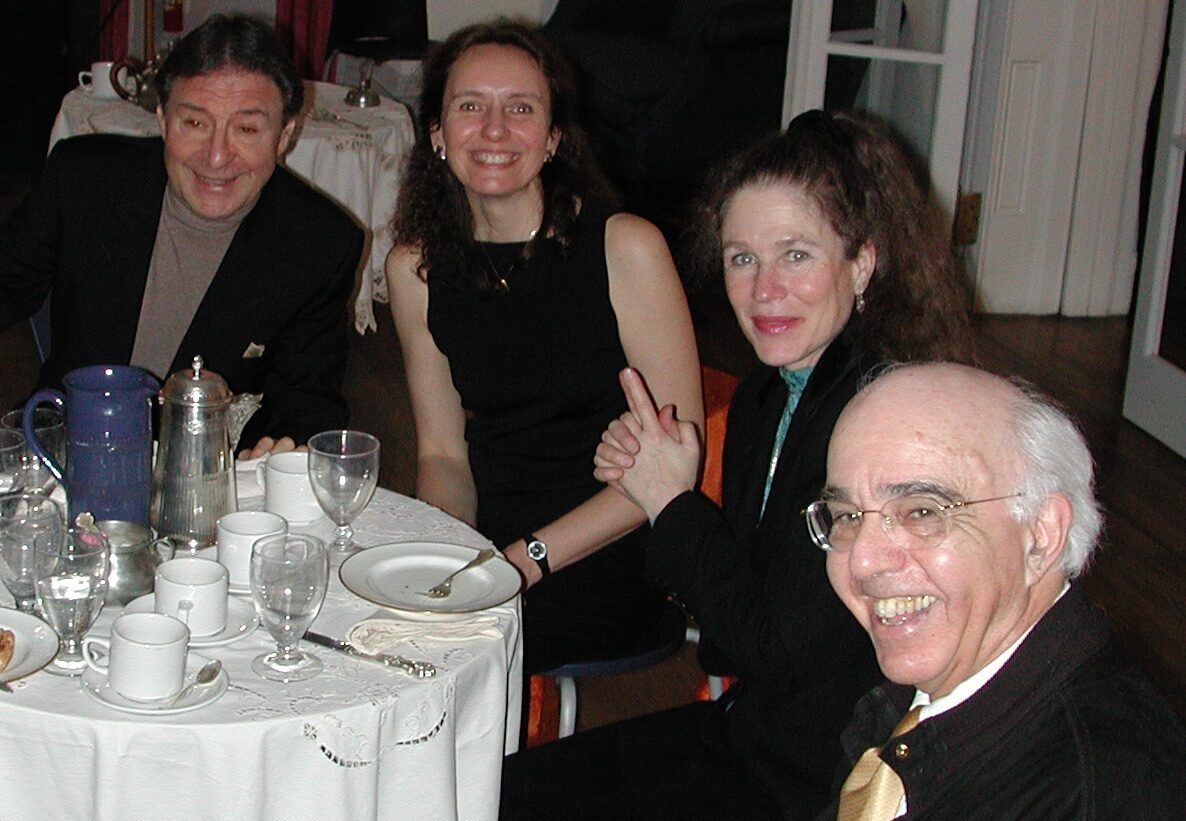
Opening of Exhibition “Beyond Surfaces”: with Studio photographer Al Fisher, Composer Yehudi Wyner, and Conductor Susan Davenny-Wyner, 2004

Testimonials

“A revelation of subtlety, color, and translucence- magnificent & breathtaking. An Inspiration.”— Lynn Harrell, Anne-Sophie Mutter, and André Previn —

“In one of the many manifestations of your expressions of art, you integrate so much in one installation— is it sculptural, ikebana, a meditation on the silk and spice roads, all of the above and more? Your life, thinking and actions seem so suffused in the integration of knowledge, thought and feeling. Your curiosity to know, to feel, and what you find become materialized in visual and tactile forms. There’s a sense of exhilaration and ecstasy in all this, hard to describe, but definitely felt.”— Yo-Yo Ma —

“Christine’s intuitive power of observation has helped me view my own work with much sharper insight. She has inspired my first forays into abstract photography in which I also look for shapes and ‘figures’ and new textures to discover.”— Sal Lopes, Photographer —

“The stage was bare except for a single wire music stand on which rested a tablet computer and an exotic, zen flower structure. The spiky, swirly shapes of the foliage constituted a visual counterpoint to the swirls of the music—simple, yet complicated. ”— Elisa Birdseye, The Boston Music Intelligencer —

“All art aspires to the condition of music, and Christine Arveil’s paintings exemplify this idea.”— Alicia Faxon, Arts New England —

“Such desire to bring out unusual sensations lies within the exquisite knowledge of techniques for applying varnish, shellac and gold leaf, as well as in the knowledge of the metaphorical value of calligraphy applied to various writings and epochs. Coming from this ancestral wisdom Christine Arveil knew how to recreate a very unique artistic universe dominated by the telluric forces of thrust and attraction, forces still present in the imaginary of the islands.”— Gabriela Canavilhas, Minister of Culture, Lisbon —

“I can’t help remarking on Ms.Arveil’s plant-construction. [It] stood a bit higher than Miriam Fried at stage right, as if it were a silent second performer, proud, but keeping its distance in the face of the glorious soloist. It struck me as extraordinarily beautiful, a kind of balancing silent echo of the music, to mirror the contrapuntal richness of Bach’s textures. I felt that it was virtually ‘music in stasis’.”— Alan Levitan, The Boston Music Intelligencer —

“The drawings and sculptures, both of darkness and of light, lend poetic richness and depth to this exhibition. She evokes perpetual movement and rhythm in a thunderous roar.”— Rosemary Noon, Curator, Loeb Fellow, Harvard University School of Design —

An Artist's Journey

First in my family to complete high school, continue on to college, and later on, graduate studies, I was also the first to choose a life in the arts. Associating painting with disgrace, my parents prohibited its practice, or any kind of art education. Minimalism and frugality, practice in hiding, fundamentally marked my artwork, alongside an intense curiosity for any artistic expression. As a child, I could not paint a whole image, so scared I was to waste the little color left in my great-grandfather’s aquarelle tin box, which my grandmother had secretly passed on to me, my heritage. It felt tragic to empty a goblet of color. A vivid violet was particularly intriguing, which I later recognized in Albrecht Durer’s sketching palette. Developing conventional images was beyond reach, but I became fascinated with the metamorphosis of the blank paper, when one stroke of color touches it, the line’s purity, its fragile strength. Times of peace, in my grandmother’s care, were spent silently in the realm of imagination, richer than the rare toys or books.

Growing up at the margin of a troubled family where sexual abuse seemed a norm, neglect was better than attention. Art, this chance encounter, became a land to reach, the banner of a humanity worth living, my unquenchable determination. Music carried me along: first, bird songs and wind over the low beat of passing cars on the nearby boulevard, then random pop songs on the radio, and finally the universe of composed sounds that student musicians conveyed, and where I forever found a home.

I owe my foundations in visual art to painter Luis Ansa, who taught a few students at his studio, in Paris’ furniture district, still active in the 1980’s. He was a restorer of Chinese lacquer but his views on the art of the brush were broad and fascinating. As art school was again unreachable, I had the chance to get a traditional studio education, with an international twist.

Yet, the first twenty years of my adulthood remained unsurprisingly trapped in new forms of domestic violence. At the time, no prevalent culture, nor laws, protected children and women, in my homeland. Although I believe that art is competence-based, as music so well demonstrates, I cannot but interrogate how life informs art work. The public relishes artists’ misery, the drama, constructs exciting legends to explain originality, but ignores the true cost of art making. Too often, it silences artists and distorts messages.

Resisting a marketing that feeds on pain, I have long kept my journey private —my paintings stood unsigned and untitled until 2005, when my life had found tranquility, in the United States. Yet, I remained curious to explore how life and art interplay. Do different art forms share a unique creative source or are they multiple springs? When do paths flow together or diverge? Painting at times triggered violent nausea, while writing would mostly bring a smile, much like the visit of a good friend. The mind-body experience articulates in complex combinations. There is little obvious logic, except that art practice has a strong impact, well beyond satisfaction, leisure, or immediate healing.

Fascinated with experiencing the impact of different creative vehicles, I embarked on the Volcano Project. First, I spent two years writing a fiction and manifesto of aesthetics, narrating the impossible pursuit of a sculptor who attempts to shape lava before it solidifies. Pursuing this metaphor of the impossible and titanic, outrageous, attempt to “create” art, I then committed to the physical experience of making unlikely visual objects. My medium for lacquer, violin varnish, is unfit to painting large-scale, doomed to fail, and exhausting. Additionally, it is a self-destructive process as each layer is carefully sanded by hand, virtually destroying the image previously painted in the micro-thin layer of resin. Yet, images kept reappearing. The main common point between the fictional character and my experience was that I equally drove myself to exhaustion and faced a growing question mark.

Exploring abstraction and realism, the project did not find an obvious conclusion, but rather descended into complexity, much like fractal geography. After the paintings, the open-ended Stone Drawings of one same volcanic stone day after day, year after year, turned into abstract images. The rigorous observation of one fragment, every day, became vertiginous, and the whole basalt stone ever impossible to represent. Realism was evasive, and its pursuit fundamentally produced abstraction.

The Volcano raised many more questions: how could a visitor “read” and perfectly articulate a visual image as the artist intended it, where other viewers only saw smeared paint? Clearly, when the meaning underlining an artwork matters to us, we know to extract it, we understand, and usually the conversation starts with: “I had this experience too…”

The experiential power of art seems to be conducive to meaning before aesthetics, for artists and audiences alike. It reveals the intelligence of feelings informed by life experience and intimate identity. In that respect, writing, painting, sculpting, music, any art form, meet.

I began as a studio artist, who assumed that artwork needed a place to be made, no matter if the “studio” was a basement or a kitchen table. But the studio became the work and my art process migrated into anything at hand. When life cannot make room for art, art spills all over life, and the dam containing the desire for art leaks, then breaks loose.

Conceding the fight, I realized that embracing every aspect of life as an art pursuit was my statement. Am I building this positive place that I thought existed somewhere on earth, as a child? The pursuit is interesting, it has beauty, and charm too. Against all odds, from aspiring to paint and write, I progressed to a radical “art de vivre”, a way of life. I gutted and redesigned houses, I installed sculptures of flowers for music performances, I built stage sets with furniture inspired from cubist paintings, I composed meals and gatherings as performances…

This radical perspective brings fluidity across domains and the refreshing astonishment of art to every act of life. Art has transformative potential. It is powerful and efficient, but knows to ease its way graciously, even in its strongest, explosive expressions.

Art is alchemic.